
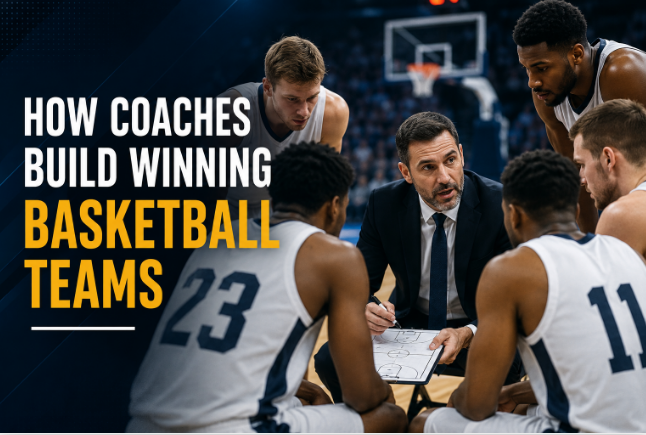
Success in basketball rarely happens by accident. Behind every consistent contender is a coach who understands how to bring structure, purpose, and cohesion to a group of individuals. For fans and aspiring analysts, understanding how coaches build winning basketball teams reveals that victories are not just about talent—they are about planning, communication, and adaptability.
At every level of the sport, from grassroots leagues to professional competition, the difference between a good team and a great one often comes down to coaching decisions. These decisions shape how players train, how they think, and how they respond under pressure. This article breaks down the key elements that define successful basketball teams and the strategies coaches use to build them.
Establishing a Clear Team Identity
One of the first steps in building a winning team is defining a clear identity. Coaches decide what their team stands for on both ends of the court.
Offensive Identity
Some teams rely on fast-paced transitions and quick scoring opportunities, while others prioritize half-court execution and ball movement. A coach might design an offense around:
- Strong perimeter shooting
- Dominant post play
- Pick-and-roll efficiency
- Positionless basketball concepts
The key is consistency. Players must understand not just what to do, but why they are doing it.
Defensive Philosophy
Defense often reflects a coach’s mindset. Teams may emphasize:
- Man-to-man pressure
- Zone defense to protect weaker defenders
- Switching schemes for versatility
- Full-court pressing for tempo control
A clearly defined identity helps players react instinctively during games instead of overthinking decisions.
Building the Right Roster
Talent matters, but fit matters more. Coaches rarely look for the most skilled players individually—they look for pieces that complement each other.
Skill Balance
A well-constructed team typically includes:
- Ball handlers who control tempo
- Shooters who stretch the floor
- Defenders who anchor the system
- Role players who do the “dirty work”
Too many players with overlapping strengths can create inefficiency. Coaches aim for balance across positions and skill sets.
Character and Mentality
Winning teams often share intangible qualities:
- Discipline in execution
- Willingness to accept roles
- Competitive mindset
- Coachability
A highly talented roster can underperform if players resist structure or prioritize individual success over team goals.
Developing Players Over Time
Even the best teams are not fully formed at the start. Player development is central to long-term success.
Individual Improvement
Coaches invest time in refining each player’s strengths while addressing weaknesses. This includes:
- Shooting mechanics
- Defensive positioning
- Decision-making under pressure
- Physical conditioning
Progress is often gradual, but consistent development leads to measurable improvement across the season.
Role Clarity
Confusion about roles can undermine team chemistry. Coaches ensure that every player understands:
- Their responsibilities on offense and defense
- When to be aggressive and when to defer
- How their role contributes to the team’s success
Clear roles reduce hesitation and improve overall efficiency.
Creating Strong Team Chemistry
Chemistry is often discussed but not always understood. It is not just about players getting along—it is about trust and coordination.
Communication
Winning teams communicate constantly:
- Calling out screens
- Directing defensive rotations
- Sharing information during timeouts
Effective communication prevents breakdowns and builds confidence.
Trust Between Players
Trust allows players to:
- Make quick passes without hesitation
- Rotate defensively without fear of mistakes
- Support teammates during difficult moments
Coaches cultivate trust through repetition, accountability, and shared experiences.
Strategic Game Planning
Preparation is where coaching becomes most visible. Before each game, coaches analyze opponents and adjust their approach.
Scouting Opponents
Coaches study:
- Offensive tendencies
- Defensive weaknesses
- Key players and matchups
This information shapes the game plan, allowing teams to exploit advantages.
In-Game Adjustments
No plan survives unchanged. Coaches must adapt to:
- Opponent adjustments
- Player performance fluctuations
- Game momentum
Quick, effective decisions during games often separate average coaches from elite ones.
Key Concepts Coaches Emphasize
To simplify complex strategies, coaches focus on fundamental principles that guide performance.
Core Principles of Winning Teams
- Spacing: Proper positioning creates scoring opportunities
- Ball Movement: Passing breaks down defenses
- Defensive Discipline: Staying organized prevents easy baskets
- Transition Awareness: Quick reactions after turnovers or rebounds
- Effort and Hustle: Consistent energy impacts every possession
These principles are drilled repeatedly until they become second nature.
Practical Insights: How It Shows in Real Games
Understanding coaching strategies helps fans see the game differently.
Offensive Execution
Watch how players move without the ball. Good coaching creates:
- Open shooting lanes
- Clear passing angles
- Structured plays that adapt in real time
Defensive Coordination
Strong defensive teams move as a unit. Notice:
- Help defense rotations
- Communication during switches
- Positioning to limit high-percentage shots
Bench Impact
Coaches also influence games through substitutions:
- Resting key players without losing momentum
- Introducing specialists for specific situations
- Adjusting lineups based on matchups
These decisions often go unnoticed but are crucial to winning.
Common Mistakes and Misconceptions
Even experienced fans sometimes misunderstand what makes teams successful.
Talent Alone Wins Games
While talent is important, poorly organized teams often lose to well-coached opponents. Structure and discipline amplify talent.
More Scoring Equals Better Offense
Efficient scoring matters more than volume. Coaches prioritize:
- Shot selection
- Ball movement
- Minimizing turnovers
Defense Is Just Effort
Effort is essential, but defensive success also requires:
- Positioning
- Communication
- Understanding schemes
Without these elements, effort alone is not enough.
Advanced Insight: Modern Trends in Coaching
Basketball continues to evolve, and coaching strategies have adapted accordingly.
Data and Analytics
Modern coaches rely heavily on data to guide decisions:
- Shot efficiency analysis
- Player tracking metrics
- Lineup performance statistics
This information helps refine strategies and improve decision-making.
Positionless Basketball
Traditional positions are becoming less rigid. Coaches now value players who can:
- Handle the ball
- Shoot from range
- Defend multiple positions
This flexibility creates mismatches and increases tactical options.
Pace and Space Philosophy
Many teams emphasize:
- Faster tempo
- Three-point shooting
- Floor spacing
This approach maximizes scoring efficiency and stretches defensive systems.
Leadership and Culture
Beyond tactics, coaching is about leadership. The best coaches create environments where players can thrive.
Setting Standards
Coaches establish expectations for:
- Work ethic
- Accountability
- Team behavior
Consistency in these standards builds a strong culture.
Handling Pressure
Winning teams face high expectations. Coaches help players:
- Stay focused during critical moments
- Manage emotions
- Maintain confidence after setbacks
Mental resilience often determines outcomes in close games.
Conclusion
Understanding how coaches build winning basketball teams reveals that success is a combination of strategy, preparation, and human connection. From defining a clear identity to developing players and making in-game adjustments, every decision contributes to the bigger picture.
Winning teams are not just collections of talent—they are systems shaped by thoughtful coaching. For fans, recognizing these elements adds depth to every game. For aspiring players or analysts, it offers valuable insight into what truly drives success on the basketball court.
In the end, the best coaches do more than draw up plays. They create environments where individuals become a cohesive unit, capable of performing at a level greater than the sum of their parts.