Football is unpredictable by nature that’s part of what makes it compelling. But while the outcome of a match can never be certain, understanding how to read football odds can give you a clearer picture of what’s likely to happen. For beginners and even regular fans, odds often look like a confusing set of numbers. In reality, they are one of the most valuable tools for analyzing matches and making informed predictions.
Learning how to read football odds and make smarter predictions isn’t about guesswork or blind luck. It’s about interpreting probabilities, understanding market movements, and combining that knowledge with real football insight. Whether you’re watching games casually or analyzing them more seriously, this skill can significantly improve how you view the sport.
What Are Football Odds and Why Do They Matter?
At their core, football odds represent probability. They tell you how likely a bookmaker believes a specific outcome is—whether that’s a home win, draw, or away win.
Odds also determine potential returns, but beyond that, they act as a snapshot of collective expectations. These expectations are shaped by data, team form, injuries, historical trends, and betting market activity.
For example:
- A team with low odds is considered more likely to win
- A team with high odds is seen as an underdog
However, odds are not predictions in themselves they are reflections of probability. Your job is to interpret them better than the average bettor.
Understand the Different Types of Football Odds
Decimal Odds (Most Common Format)
Decimal odds are widely used across Europe, Africa, and many global platforms. They are straightforward and beginner-friendly.
Example:
- Team A: 1.80
- Draw: 3.50
- Team B: 4.20
Here’s how to read this:
- The lower the number, the higher the probability
- A 1.80 odd suggests Team A is favored to win
To calculate implied probability:
- Divide 1 by the odds
- Multiply by 100
So:
- 1 ÷ 1.80 = 0.555 → 55.5% probability
This gives you a clearer idea of how likely an outcome is considered.
Fractional Odds
Popular in the UK, fractional odds show potential profit relative to your stake.
Example:
- 5/1 means you win 5 units for every 1 unit staked
While less common globally, understanding them helps when comparing different platforms.
American Odds
These odds use positive and negative numbers:
- Negative (e.g., -150): Indicates favorites
- Positive (e.g., +200): Indicates underdogs
Though less relevant in many regions, they follow the same principle—probability expressed differently.
How to Read Football Odds Effectively
1. Convert Odds Into Probability
The most important step is turning odds into percentages. This allows you to think analytically rather than emotionally.
If a team has:
- Odds of 2.00 → 50% probability
- Odds of 1.50 → 66.6% probability
This helps you ask the right question:
Do I believe this outcome is more or less likely than the odds suggest?
That’s where smart prediction begins.
2. Compare Odds Across Markets
Different bookmakers may offer slightly different odds for the same match. These differences can reveal:
- Market confidence
- Value opportunities
- Shifts in public opinion
If one bookmaker offers significantly higher odds for the same outcome, it may indicate a pricing inefficiency—or a risk others are avoiding.
3. Watch for Odds Movement
Odds are not static. They change based on:
- Team news (injuries, suspensions)
- Betting volume
- Tactical expectations
For example:
- If odds for a team drop from 2.20 to 1.90, it suggests growing confidence in that team
- A sudden shift could mean insider information or strong betting activity
Understanding these movements can provide an edge before kickoff.
Key Concepts Every Beginner Should Know
To read football odds properly, you need to understand a few essential concepts:
Implied Probability
- Converts odds into percentage chance
- Helps compare your judgment with the market
Value Betting
- Occurs when you believe the actual probability is higher than the implied probability
- Example: Odds suggest 40%, but you estimate 50%
Overround (Bookmaker Margin)
- Bookmakers build a margin into odds to ensure profit
- This means total implied probability often exceeds 100%
Market Types
Common football betting markets include:
- Match Result (1X2)
- Both Teams to Score
- Over/Under Goals
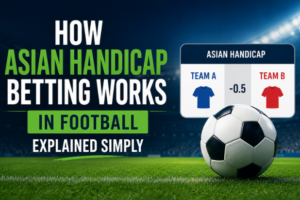
- Handicap markets
Each market reflects different aspects of a game and requires separate analysis.
Applying Odds to Real Match Analysis
Understanding odds is only half the equation. The real skill lies in combining them with football knowledge.
Example Scenario
A match between a top team and a mid-table side shows:
- Top team: 1.60
- Draw: 4.00
- Underdog: 5.50
At first glance, the favorite seems obvious. But a deeper look might reveal:
- The favorite is missing key players
- The underdog has strong home form
- Recent head-to-head results are close
If you believe the favorite’s chances are closer to 50% rather than 62.5% (implied by 1.60 odds), then the odds may be overestimating them.
This is where smarter predictions emerge—not from following odds blindly, but from questioning them.
Practical Tips for Making Smarter Predictions
Focus on a Few Leagues
Trying to analyze every match leads to shallow understanding. Instead:
- Follow 2–3 leagues closely
- Track team form, tactics, and player availability
This depth improves your ability to interpret odds accurately.
Use Statistics, But Don’t Rely on Them Alone
Stats like:
- Expected goals (xG)
- Possession
- Shots on target
…are valuable, but they don’t tell the full story. Context matters:
- Was a team leading early?
- Did a red card affect the match?
Combine data with observation for better insights.
Avoid Emotional Decisions
Many beginners make predictions based on:
- Favorite teams
- Big-name clubs
- Recent highlights
Odds already account for public bias. Smarter predictions require objectivity and discipline.
Look Beyond the Match Result Market
The 1X2 market is popular, but often inefficient due to heavy public betting.
Consider alternatives:
- Both Teams to Score
- Over/Under goals
- Double chance
These markets sometimes offer better value because they receive less attention.
Common Mistakes to Avoid
Misinterpreting Low Odds as “Safe”
Low odds don’t guarantee outcomes. A team priced at 1.30 still has a meaningful chance of not winning.
Ignoring Market Movements
Odds shifts often reflect important developments. Ignoring them means missing key information.
Overestimating Underdogs
While upsets happen, they are less frequent than people assume. High odds often reflect real weaknesses.
Chasing Losses
Making impulsive decisions after a wrong prediction leads to poor judgment. Stick to analysis, not emotion.
Advanced Insight: How Modern Betting Markets Influence Odds
Football odds today are shaped by more than just bookmaker opinion. Advanced models, algorithms, and global betting activity play a major role.
Data-Driven Pricing
Modern odds are influenced by:
- Machine learning models
- Historical performance data
- Player-level analytics
This makes markets more efficient—and harder to beat.
The Role of Sharp Bettors
Professional bettors, often called “sharps,” influence odds significantly:
- Their bets carry weight
- Bookmakers adjust lines based on their activity
If odds move quickly without obvious news, it may be due to sharp money entering the market.
Market Efficiency and Opportunities
Top leagues tend to have highly efficient markets:
- English Premier League
- UEFA Champions League
Smaller leagues may offer more opportunities:
- Less data coverage
- Slower market reactions
However, they also come with higher uncertainty.
Conclusion
Learning how to read football odds and make smarter predictions is a gradual process. It starts with understanding what odds represent, but it evolves into interpreting them within the broader context of the game.
Odds are not just numbers, they are insights shaped by data, opinion, and market behavior. The more you learn to question them, compare them, and combine them with real football knowledge, the sharper your predictions will become.
There is no shortcut or guaranteed formula. But with patience, discipline, and a clear analytical approach, you can move beyond guesswork and start seeing football through a more informed lens.