
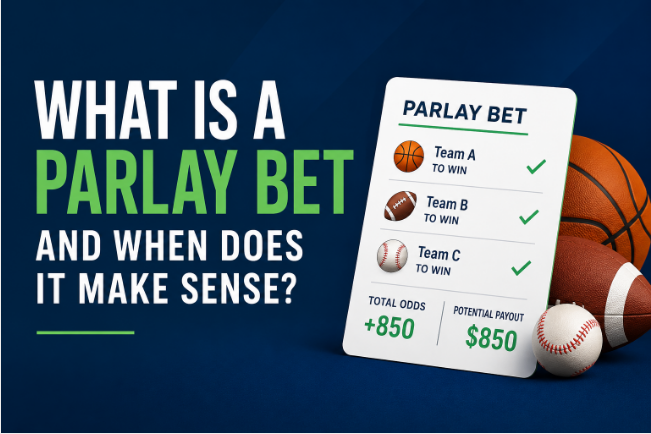
If you’ve spent any time around football betting conversations, you’ve probably heard someone mention hitting a big parlay over the weekend. So what is a parlay bet, exactly, and when does it make sense to actually place one? In simple terms, a parlay combines two or more individual bets into a single wager, and every single leg of that wager has to win for you to get paid. It sounds straightforward, but the way parlays affect your odds, your risk, and your overall strategy is a bit more nuanced than most people realize when they first start betting. This article breaks down how parlays actually work, why sportsbooks love offering them, and the situations where a parlay can be a reasonable part of your betting approach rather than just a long shot.
How a Parlay Bet Actually Works
A parlay takes multiple separate bets and links them into one ticket. Let’s say you like the Kansas City Chiefs to beat the Las Vegas Raiders, and you also think the Philadelphia Eagles will cover the spread against the New York Giants. Instead of placing two separate bets, you could combine both picks into a single parlay. The payout odds get multiplied together, which means the potential return is higher than betting each game separately. But here’s the catch: if the Chiefs win but the Eagles fail to cover, your entire parlay loses. There’s no partial credit. One leg failing sinks the whole ticket, regardless of how close the other legs came to hitting.
This is the core trade-off that defines parlay betting. You’re accepting a much lower probability of winning in exchange for a much larger potential payout. A two-team parlay might pay close to 2.6 to 1 instead of the roughly even odds you’d get on a single bet, and a five or six-team parlay can pay out at odds north of 20 to 1. The appeal is obvious, especially for casual bettors who like the idea of turning a small stake into a meaningful win. But the math behind why books push parlays so heavily is worth understanding before you start building your own.
Why Sportsbooks Promote Parlays So Heavily
Sportsbooks build a small profit margin, often called the “vig” or “juice,” into every bet they offer. On a single bet, that margin is relatively small. But when you stack multiple bets into a parlay, that margin compounds with each added leg. This means the true odds of winning a parlay are usually worse than the payout suggests, and the gap between fair odds and actual payout odds widens as you add more legs.
Think about a simple three-leg NFL parlay where each leg is essentially a coin flip, like three games where you’re picking against the spread. In theory, your odds of hitting all three would be 1 in 8. But the payout you’ll actually receive is calculated using odds that build in extra margin for the book, so your realistic return is lower than the “true” probability would justify. This is exactly why sportsbooks promote parlays through app notifications, same-game parlay builders, and boosted odds promotions. They’re not bad bets to understand or occasionally use, but they are statistically tilted in the house’s favor more than most single bets.
When a Parlay Can Make Sense
None of this means parlays should be avoided entirely. There are situations where a parlay is a reasonable, deliberate choice rather than an impulsive one. The clearest case is when you genuinely have strong conviction on multiple games and you’re using a parlay specifically because you want to amplify a smaller stake into a bigger potential return, while accepting that the likelihood of success drops with each leg you add.
For example, imagine you believe the Buffalo Bills’ defense matches up well against a banged-up Miami Dolphins offensive line, and separately you think the Detroit Lions’ high-powered offense will be too much for a struggling secondary they’re facing that week. If you have real reasoning behind both picks rather than just a gut feeling, combining them into a two-team parlay can be a sensible way to size up a bet you feel good about, without risking the larger amount it would take to get a similar payout on a single wager. The key is keeping the number of legs low. Two or three-leg parlays carry meaningfully better odds of hitting than five or six-leg parlays, even though the payout multiplier on bigger parlays looks tempting.
Parlays can also make sense for correlated outcomes within the same game, often called same-game parlays. If you expect a particular quarterback to have a big passing day, it might also make sense that his top receiver goes over their projected receiving yards, since those two outcomes tend to move together. Betting them as a parlay reflects that connection in a way that two unrelated bets wouldn’t.
Managing Risk When Using Parlays
If you decide to use parlays as part of how you bet on football, treating them as a small, controlled piece of your overall approach matters more than the specific picks you choose. A common mistake is treating parlays as the main strategy rather than an occasional addition. Because the odds of hitting longer parlays drop quickly, relying on them as a primary betting method tends to produce long stretches of losses punctuated by occasional bigger wins, which isn’t a sustainable approach for most bettors.
A more measured way to use parlays is to keep your stake size smaller than what you’d bet on a single game, since the payout multiplier is doing the heavy lifting on potential return. Some bettors also limit themselves to parlays of two or three legs specifically because the odds of winning don’t fall off as steeply as they do once you start adding a fourth, fifth, or sixth leg. Being honest with yourself about why you’re making each pick, rather than just chasing a flashy payout number, tends to separate bettors who use parlays thoughtfully from those who lose money chasing them.
Conclusion
A parlay bet combines multiple picks into one wager, offering a bigger potential payout in exchange for needing every single leg to win. Sportsbooks favor parlays because their built-in margin compounds with each added leg, making them statistically tougher to win than they might first appear. Still, parlays aren’t inherently a bad tool. Used sparingly, with a small number of legs and genuine reasoning behind each pick, they can be a reasonable way to size up a bet you feel confident about. The key is understanding the trade-off you’re making and not letting the appeal of a bigger number override sound decision-making.
Disclaimer: This article is intended for educational purposes only and does not constitute betting advice. Sports betting involves financial risk, and outcomes are never certain. Readers should gamble responsibly, only wager what they can afford to lose, and seek support if betting becomes a problem.